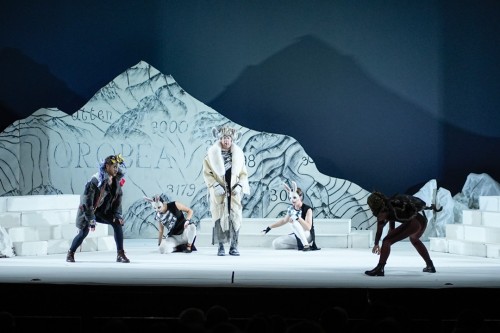
Giving up the Ghost?
Melbourne's Rivoli Cinemas never sleep. Even after the last show of the night, when all the staff have gone home, a host of dwellers allegedly roam through the historic building. The old man in row P of Cinema One remains in his seat awaiting the next film, while the old lady in the foyer gently blows the dust from the counter tops. Along the "whispering stairwell" ghosts are said to argue amongst themselves.
The Rivoli Cinemas in Camberwell, to Melbourne's East, are one of many haunted locations in Australia. A handful of now familiar spectres and spooks have often been perceived by staff at the cinema. Meaghan Crozier, who has worked at the Rivoli for the past two years, recently told the Melbourne Weekly of the time she tried to leave the Cinema One projection room at the top of the whispering stairwell. "There were lots of voices, it sounded like a dozen, young whispery voices," she said.
Do these ghosts really exist or are Meaghan and her counterparts imagining it all? This is a question that has bounced from believer to sceptic for generations and recently a group of researchers in the UK, led by Richard Wiseman, set out to answer it once and for all.
Ghost Busters
Wiseman and his colleagues found two of the most 'haunted' places in Britain - the South Bridge Vaults in Edinburgh, Scotland and Hampton Court Palace in England - and decided to investigate them.
Almost 700 naive but brave volunteers took part in the studies, reporting any strange or eerie feelings they had while walking through the Vaults or the Palace. Meanwhile, the sneaky scientists were recording a variety of environmental factors such as light, temperature, room dimensions and magnetic fields progressing through the air.
At the end of the study, recently published in the British Journal of Psychology , it was found that people consistently reported unusual experiences in the same areas of the Vaults or the Palace.
The experiences ranged from odd odours and changes in temperature to apparitions and a sense of being watched. Even though the participants walked through many different rooms and had no knowledge of what other people had previously reported, only certain rooms were consistently found to generate the uneasy emotions, forcing the investigators to accept that these rooms may in fact be 'haunted.'
What the word 'haunted' means is, of course, another question. Taking their recordings back to the laboratory, the scientists were interested to find that the most 'haunted' rooms in the eerie buildings were also those that had the most highly fluctuating magnetic fields or subtle changes in the lighting inside and outside the room.
The researchers conclude that while people consistently report unusual experiences in 'haunted' areas, they "do not represent evidence for 'ghostly' activity, but are instead the result of people responding - perhaps unwittingly - to 'normal’ factors in their surroundings."
FULL STORY...


Ultimi Articoli

Milano — I colori dei bambini per la pace a Milano Cortina 2026

Amazon sotto la lente del Garante Privacy — Telecamere, dati e diritti nei magazzini italiani
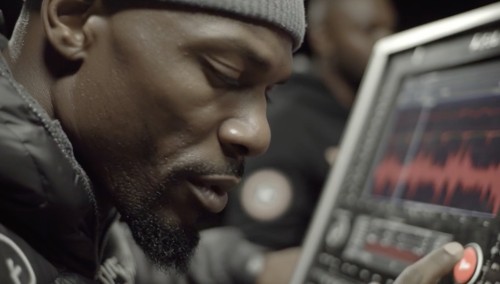
Ma il vishing è storia vera? Prefisso +34 e chiamate dall’estero — Attenti, la vostra voce può diventare un clone
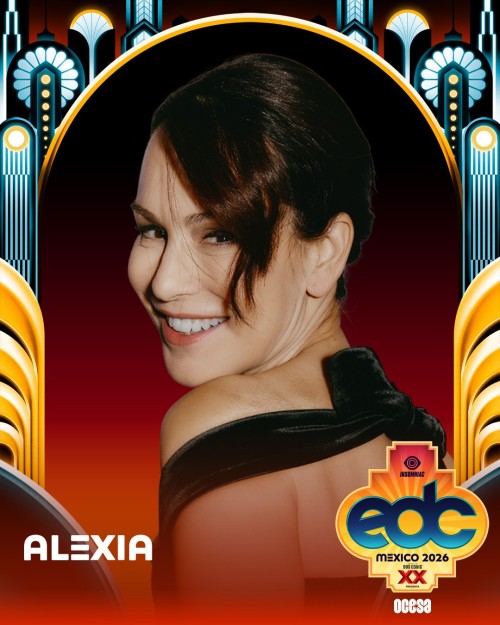
Alexia torna a Città del Messico — confermata alla line-up di EDC Mexico 2026
Milano Cortina 2026 — Una rete diffusa di media centre porta i Giochi nel territorio
SOMBR — esce il singolo ''Homewrecker'' mentre parte il tour sold-out europeo con tappa a Milano

Fan Village Milano Cortina 2026 aprono al pubblico — dove e come partecipare
FORTE e CHIARA al Teatro Carcano di Milano
Sesto San Giovanni — La Fiamma Olimpica attraversa la città e accende la comunità