BERLIN; Over Christmas vacation, Secretary of State Condoleezza Rice took home a three-foot stack of reports written by the State Department historian on previous efforts by the United States to forge Middle East peace. Rice had read memoirs by her predecessors, but as she embarked on her own effort to help end the Israeli-Palestinian conflict, she decided she needed to study a day-by-day diplomatic narrative of what had gone wrong in the past.
Her conclusion: A diplomat needs to quietly build support behind the scenes in informal talks between the Israelis and Palestinians, seeking the right combination of leverage and circumstance to make an impact. In her mind, Rice and her aides say, the moment is now.
But the lackluster outcome of the Israeli-Palestinian summit brokered by Rice in Jerusalem on Monday suggests her optimism may be misplaced. Diplomats and Middle East experts applaud her willingness to invest her prestige in trying to solve an intractable problem, but some wonder whether her efforts are six years too late.
Rice is pushing the Israelis and Palestinians to sketch the contours of a Palestinian state, much as President Bill Clinton did before he left office. But diplomats say the prospects have dimmed with years of violence, weak leadership in both camps and the rise of the militant group Hamas, which is dedicated to Israel’s destruction and won Palestinian legislative elections last year.
Palestinian Authority President Mahmoud Abbas on Tuesday described the summit as "tense and difficult," while the Israeli government ruled out discussions on the diplomatic endgame if Abbas goes through with plans to form a unity government with Hamas.
Rice -- who arrived here Tuesday night for talks with European officials after meeting earlier in the day with Arab diplomats and security chiefs in Amman, Jordan -- insists that the conditions have never been better for peace.
This confidence reflects her central role in developing and implementing U.S. policy toward the conflict for the past six years. "I think on paper there was a lot that was close" in 2000, Rice said last month. "But the underlying circumstances, I think, those conditions are better now."
The late Palestinian leader Yasser Arafat was never going to accept a peace deal, Rice argues, but he has been replaced by Abbas. She adds that the Likud Party was not going to support Clinton's proposals, but now much of the Israeli right accepts the idea of a Palestinian state after a Likud-led government, under Prime Minister Ariel Sharon, took the dramatic step of withdrawing from the Gaza Strip. "The breadth of the Israeli political system that is actually united behind a two-state solution is very different than in 2000," Rice said.
Rice's slant on the Middle East has been shaped in part by Israelis, first by Sharon and more recently by Foreign Minister Tzipi Livni, U.S. officials say.
Rice, for instance, adopted the phrase "political horizon" from Livni, which is intended to illustrate the endgame discussions, though it is not a new concept; then-Secretary of State Colin L. Powell used it in 2002. Rice's division of the region into "moderate" elements (Israel, Abbas, Egypt, Jordan and Saudi Arabia) and "extremist" forces (Iran, Syria, Hezbollah, Hamas) was also first articulated by Livni a few weeks before it became part of Rice's rhetoric.
Arabs and Europeans chafe at such clear-cut distinctions. "The Middle East is the Middle East," said Egyptian Foreign Minister Ahmed Aboul Gheit. "You have different trends, and you have different interests" that vary from day to day.
Aboul Gheit's view would explain why Abbas, supposedly a member of Rice's moderate camp, would join with the extremists. Abbas said the power-sharing arrangement is intended to stop Palestinian factional violence that has killed scores of people in recent months.


Ultimi Articoli
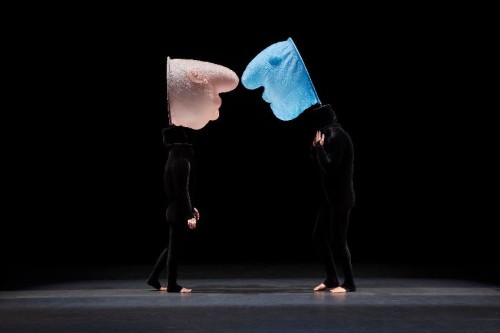
Mummenschanz: 50 anni di poesia silenziosa in scena al Teatro Menotti di Milano

Milano — I colori dei bambini per la pace a Milano Cortina 2026

Amazon sotto la lente del Garante Privacy — Telecamere, dati e diritti nei magazzini italiani
Ma il vishing è storia vera? Prefisso +34 e chiamate dall’estero — Attenti, la vostra voce può diventare un clone

Alexia torna a Città del Messico — confermata alla line-up di EDC Mexico 2026

Milano Cortina 2026 — Una rete diffusa di media centre porta i Giochi nel territorio

SOMBR — esce il singolo ''Homewrecker'' mentre parte il tour sold-out europeo con tappa a Milano

Fan Village Milano Cortina 2026 aprono al pubblico — dove e come partecipare
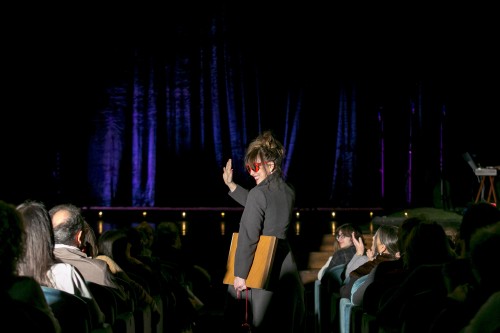
FORTE e CHIARA al Teatro Carcano di Milano