INTRODUCTION : In mammals, the progenitors of extraembryonic and embryonic tissues are established during preimplantation development (Hermitte and Chazaud, 2014; Martinez Arias et al., 2013; Schrode et al., 2014; Ohnishi et al., 2014). Differentiation of the first extraembryonic cell lineage occurs at late morula stage and generates the trophectoderm (TE) and inner cell mass (ICM), which in turn differentiate into a second extraembryonic tissue, the primitive endoderm (prE), and the epiblast from which all embryonic and adult tissues are generated. Mouse embryonic stem cells (ESCs) are derived from the ICM and early preimplan-tation epiblast (Evans and Kaufman, 1981; Martin, 1981; Ros- sant, 2008; Silva and Smith, 2008; Silva et al., 2009; Nichols and Smith, 2009; Hanna et al., 2010; Boroviak et al., 2014). ESCs may efficiently integrate into host blastocysts and differen- tiate into all embryonic cell lineages, and their state depends on a self-maintaining network controlled by core pluripotency factors Oct4 (also known as Pou5f1), Nanog, Sox2, Klf2/4, and Esrrb, as well as the LIF-, WNT-, and BMP4-signaling pathways. Indeed, these factors together define a dynamic mechanism that ensures indefinite self-renewal and protects ESCs from lineage commit- meant (Chambers et al., 2007; Niwa et al., 2009; Hanna et al., 2010; Lanner and Rossant, 2010; Zhang et al., 2010; Lyashenko et al., 2011; ten Berge et al., 2011; Festuccia et al., 2012).
ESCs grown in serum plus LIF exhibit cell-to-cell reversible dif- ferences in the expression level and sensitivity to specific tran- scription factors (TFs) and signaling molecules, which together maintain the balance between high self-renewal and susceptibil- ity to differentiation (Hayashi et al., 2008; Silva and Smith, 2008; Ying et al., 2008; Toyooka et al., 2008; Kalmar et al., 2009; Nich- ols and Smith, 2011; Smith, 2013; Torres-Padilla and Chambers, 2014). However, when cultured in the presence of LIF and two in- hibitor molecules (2i), which block glycogen synthase kinase3 (GSK3) and mitogen-activated protein kinase MEK, ESCs exhibit homogeneous expression of naive pluripotency TFs and striking similarity to the preimplantation epiblast (Ying et al., 2008; Nich- old and Smith, 2009; Nichols et al., 2009; Silva et al., 2009; Osorno and Chambers, 2011; ten Berge et al., 2011; Marks et al., 2012; Boroviak et al., 2014).
Mouse epiblast stem cells (EpiSCs) have been classically derived from the epiblast of postimplantation pre-grastrula em- bryos and express Oct4, Sox2, and a low level of Nanog together with Fgf5, brachyury (T), and other specific markers. EpiSCs cannot generate chimeric embryos when injected into host blas- tocysts, and their self-renewal and undifferentiated state depend on FGF and activin A pathways (Brons et al., 2007; Tesar et al., 2007; Hanna et al., 2010; Zhang et al., 2010; Lanner and Rossant, 2010; Kunath, 2011; Najm et al., 2011; Greber et al., 2010). The homeodomain TF Otx2 is expressed in both ESCs and EpiSCs.
RESULTS
Otx2 Expression in Preimplantation Development
First we analyzed the Otx2 expression during preimplantation development in comparison with that of markers specific for TE and ICM derivatives corresponding to Cdx2 (TE), Gata6 (early prE), Gata4 (late prE), and Nanog (epiblast) (Frankenberg et al., 2011; Grabarek et al., 2012; Marti- nez Arias et al., 2013; Hermitte and Cha-zaud, 2014). At early morula (four to eight blastomeres), Otx2 was detected at a low level, while at mid-morula (14
Articoli Correlati
Ultimi Articoli

Milano — I colori dei bambini per la pace a Milano Cortina 2026

Amazon sotto la lente del Garante Privacy — Telecamere, dati e diritti nei magazzini italiani

Ma il vishing è storia vera? Prefisso +34 e chiamate dall’estero — Attenti, la vostra voce può diventare un clone

Alexia torna a Città del Messico — confermata alla line-up di EDC Mexico 2026

Milano Cortina 2026 — Una rete diffusa di media centre porta i Giochi nel territorio

SOMBR — esce il singolo ''Homewrecker'' mentre parte il tour sold-out europeo con tappa a Milano

Fan Village Milano Cortina 2026 aprono al pubblico — dove e come partecipare
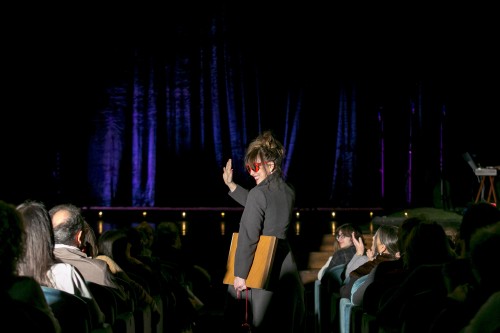
FORTE e CHIARA al Teatro Carcano di Milano
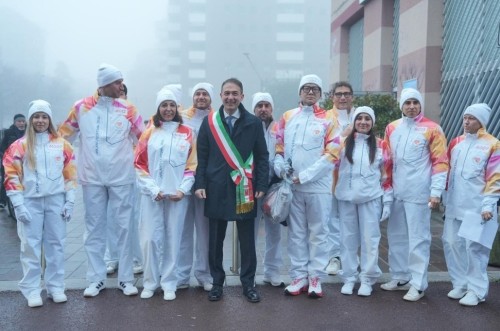
Sesto San Giovanni — La Fiamma Olimpica attraversa la città e accende la comunità