It is for us today a dream that this conference has come to-date and that it becomes a success. It will help us all to understand better this continent of which we are part and that we deeply love.
The theme of the conference " Cursed by Riches: Resources and Conflicts in Africa " reaffirms that faith in the capacity of those who have been excluded to take the lead in shaping a new and equitable order. It resounds as a pledge to join hands with governments in Africa in their endeavours to address the legacy of inequity in the allocation and distribution of resources, whether locally or internationally.
Throughout Africa there are conflicts occurring between nations, but more frequent are those that occur within a nation where the involvement of a neighbouring state or of distant ones, or of more powerful demons, is more subtly present through the provision of arms and bases for warring factions. Most numerous, and perhaps almost unnoticed, are conflicts that do not directly involve the state itself, but take place at the local level between groups competing for limited resources such as land or water.
Jacqueline Ashby, The Director of Research at the International Center for Tropical Agriculture says, “Conflict over natural resources, such as land, water, and forests, occurs everywhere today, as it has for centuries. Whether it be a local dispute between neighbouring farmers or an internationally debate over shared resources such as a waterway, people compete for the natural resources they have to ensure or enhance their quality of life. Conflict can even be seen as “a normal feature of natural resource management”.
Africa’s conflicts " including civil war, rebellion, civil strife, political instability, and ethnic or gender-based violence " are the source of ongoing humanitarian problems, including displacement of populations and economic disorder. The costs in terms of human suffering, emotional wounds, loss of life, and destruction of property are incalculable.
Ladies and Gentlemen:
One of the most noticeable weaknesses of Africa is the lack of technical knowledge, skills and tools to create wealth from their resources. There is inability to add value to the raw materials that exist so that they can be processed and taken into the local and international markets and negotiate better prices and better trade rules. Without that capacity, opportunities will continue to slip by or others will continue to take advantage of them without the benefits reaching the people in whose name these negotiations take place.
We must nurture the values of service and commitment to the common good, the persistence and patience to stay until our goals are realized. I see this as important for the African people and particularly the leaders, who should govern and serve for the benefit of the people rather than themselves. Working with the poor people at the grassroots level and with the poor and marginalized people of South Sudan and across Africa, it was depressing to see those in power fail to provide necessary services and protect the land. Instead they have continued to facilitate the exploitation of the people and their resources. Because I have experienced irresponsible governance in the course of my work with the poor and marginalized in Africa, it is difficult to dismiss the reservations and concerns expressed by the G8 leaders.
From this flows many challenges. For instance, how do we ensure that civil society in its various forms becomes an active participant in formulation and implementation of policy? How do we, individually and collectively, utilize rationally and to maximum effect, the resources the continent possesses? How do we overcome the scourge of political and religious intolerance? Ladies and Gentlemen:
We have witnessed those in power will constantly invent excuses to justify the exclusion and injustices against those perceived to be weak and vulnerable. But when resources are scarce, so degraded that they can no longer sustain livelihoods, or when they are not equitably distributed, conflicts invariably ensue. Revenues from natural resource extraction reach governments in the form of taxes, fees, royalty and signature bonus payments. But the revenue generated remains a closely guarded secret: neither governments nor companies involved disclose how much money has actually been paid. This problem is particularly serious in countries, which are highly dependent on revenue from natural resource extraction; citizens cannot access information in order to hold their governments to account on revenue expenditure and governments can divest themselves of the need for popular legitimacy. There is a long list of countries where problems of this nature have been identified including Algeria, Angola, Chad, DRC, Nigeria and Sudan.
The Sudan is Africa’s largest country with a population of almost forty million people. The Sudan, however, has been involved in internal conflicts since independence, seeking as it does to govern a country with different histories and political cultures with the tool of uniformity rather than valorize their rich diversity. As far as the South is concerned at least, the Islamization and some would say, Arabization of the country was a denial of the traditions, culture and religion of the southern peoples. At the heart of the conflicts in the Sudan as well, has been denial of the diversity, of the human rights, and the maldistribution of resources between the regions, and the resultant concentration of power in Khartoum.
From the foregoing, therefore, I suggest that it is important to for us to get a clear understanding of the dynamics surrounding the conflicts arising as a resultant of resource management. As Koinonia Community and Africa Peace Point we will continue to commit ourselves to the common good of this country and this region. In doing so, however, our approach will be encapsulated in the following major practices:
Ӣ We will seek to identify and recognize, through a process of stakeholder analysis, all groups with legitimate interests in the contested resources;
Ӣ We will seek to strengthen the capacity of excluded or weaker groups to articulate and negotiate these interests;
Ӣ We will seek to raise public awareness about the issues so that various stakeholders can move away from extreme positions before they are hardened;
Ӣ We will take a pragmatic and empirical approach to identifying the right mix of local and external strategies and forums for mediating conflicts and negotiating new arrangements;
Ӣ We will generate and share credible and detailed information needed t make implicit conflicts explicit;
And lastly,
Ӣ We will encourage governments to adopt policies and legal frameworks that can accommodate local structures of governance and bring previously excluded groups into decision-making.
In so doing, we wish to contribute to the possibility for the people sharing with us our journey in this continent and in this time, to live a full and fulfilling life.
[MB]
foto -© REUTERS

Ultimi Articoli

Strapazzami di coccole Topo Gigio il Musical: una fiaba che parla al cuore

Goldoni al Teatro San Babila di Milano con La Locandiera
Ceresio in Giallo chiude con 637 opere: giallo, thriller e noir dall'Italia all'estero

Milano celebra Leonardo — al Castello Sforzesco tre iniziative speciali per le Olimpiadi 2026

Trasporto ferroviario lombardo: 780.000 corse e 205 milioni di passeggeri nel 2025
Piazza Missori accoglie la Tenda Gialla – Tre giorni di volontariato under zero con i Ministri di Scientology
Neve in pianura tra venerdì 23 e domenica 25 gennaio — cosa è realmente atteso al Nord Italia
Se ne va Valentino, l'ultimo imperatore della moda mondiale
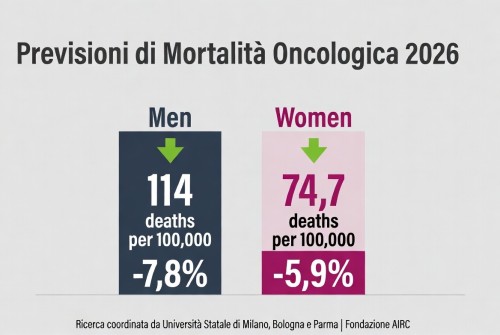
La mortalità per cancro cala in Europa – tassi in diminuzione nel 2026, ma persistono disparità